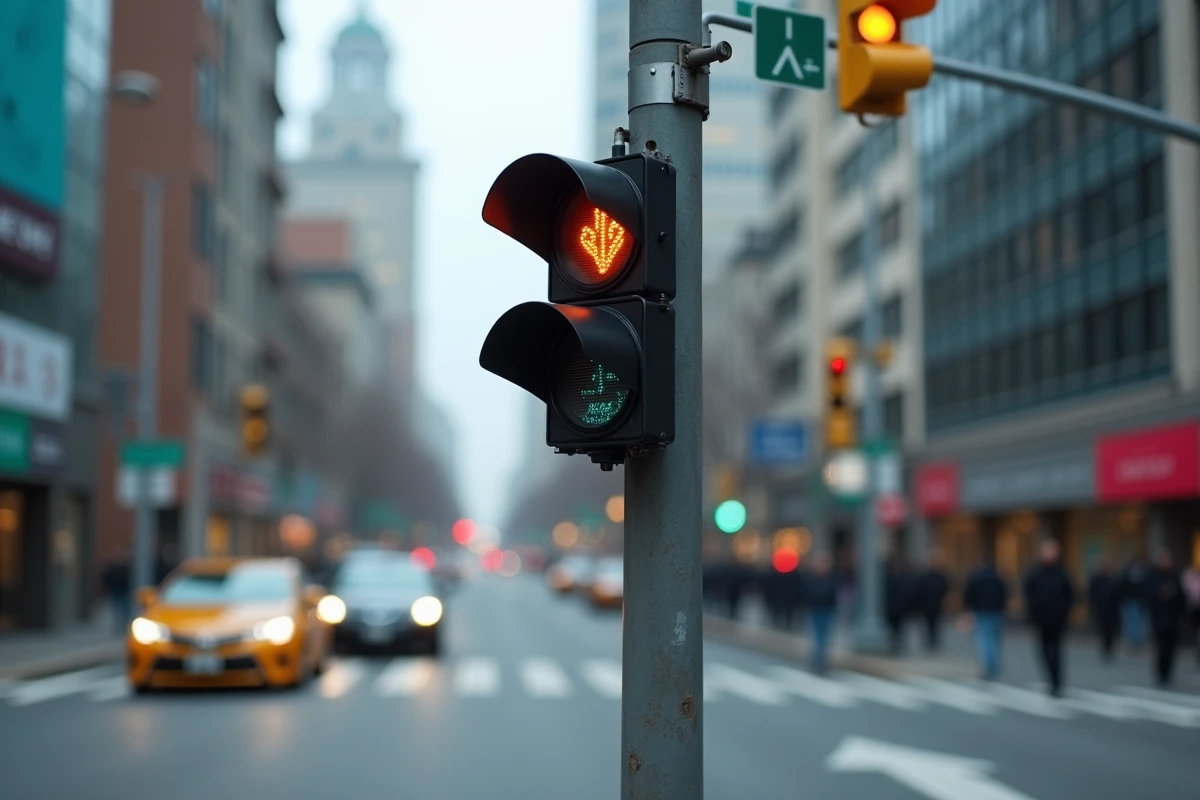
An intelligent traffic light is not just a signal head and a pole. The actual budget depends on the type of regulation chosen, the network architecture in which the light is integrated, and the level of remote supervision required. We observe that most public estimates underestimate the software component and system integration, two areas that have become increasingly significant due to rising prices of electronic components and metals.
Network architecture and integration cost of an intelligent traffic light
Intelligent traffic lights no longer operate as isolated devices. Traffic engineering offices now deploy them as nodes of a centralized regulation system, connected to a control center, a traffic light management software, and a communication infrastructure (fiber, industrial 4G, detection loops).
This integration radically changes the cost structure. The visible hardware (pole, LED lanterns, control cabinet) represents only a fraction of the budget. The most underestimated component remains the software layer: licensing of the regulation system, configuration of adaptive traffic light plans, communication protocols between intersections.
To know precisely how much an intelligent traffic light costs, one must consider the system integration cost rather than the unit price of the signal.
An intersection connected to an existing supervision center will cost significantly less than a first deployment that requires the complete creation of the network infrastructure. We recommend always asking the project manager for a breakdown by lots: civil engineering, signaling equipment, wiring and electrical connection, software layer and integration, then maintenance.
Reward light and adaptive light: two technologies, two budgets
The term “intelligent light” encompasses very different technical realities. The two main families are the reward light (or sanction) linked to speed, and the adaptive light that adjusts its cycles in real-time according to traffic flows.
Speed-controlled reward light
This type of light integrates a detection radar that measures the speed of approaching vehicles. If the driver respects the speed limit, the light remains green. In case of excess speed, it turns red. Models exist in an electric version connected to the grid or in a standalone solar version, the latter eliminating the trenching and electrical connection costs.
The technical specifications from state services require a local safety analysis, compatibility with the road hierarchy, and post-installation efficiency monitoring. These mandatory preliminary studies add a significant engineering cost to the project.
Adaptive light with dynamic regulation
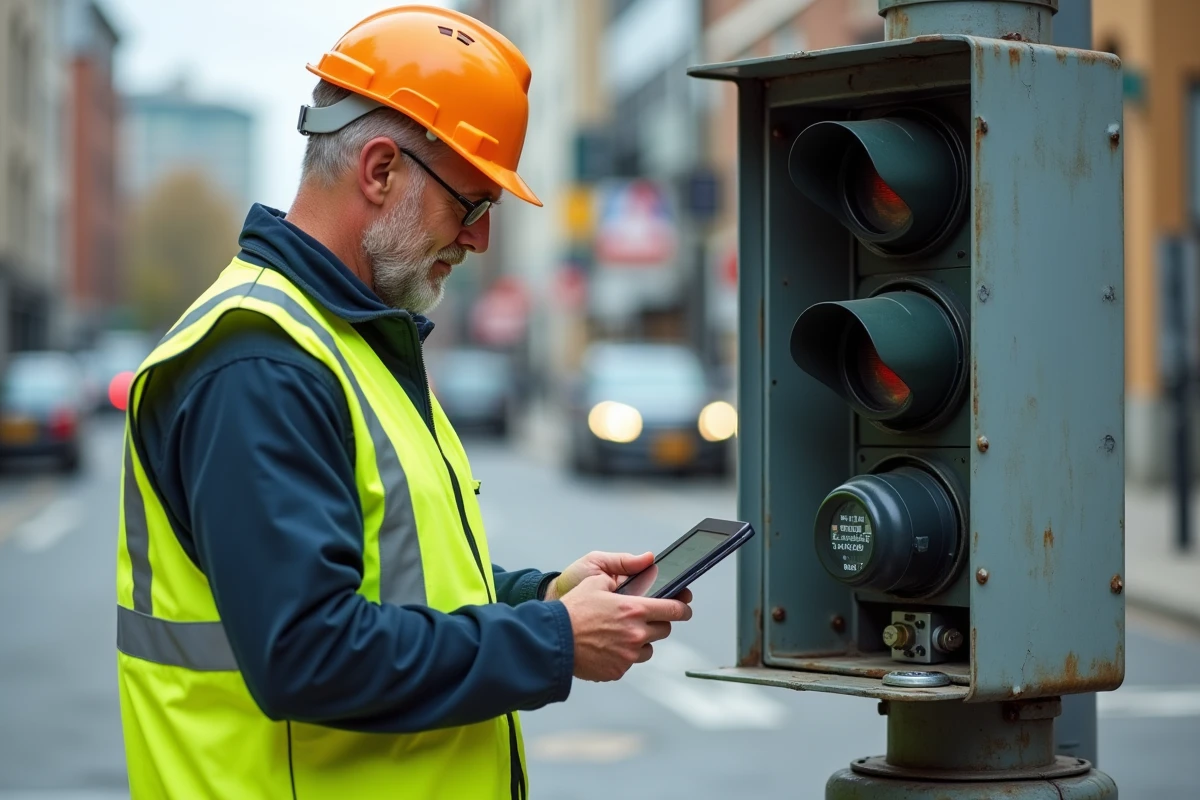
The adaptive light relies on buried detection loops, counting cameras, or radar sensors to modulate the duration of phases based on actual traffic. Its cost is higher because it requires:
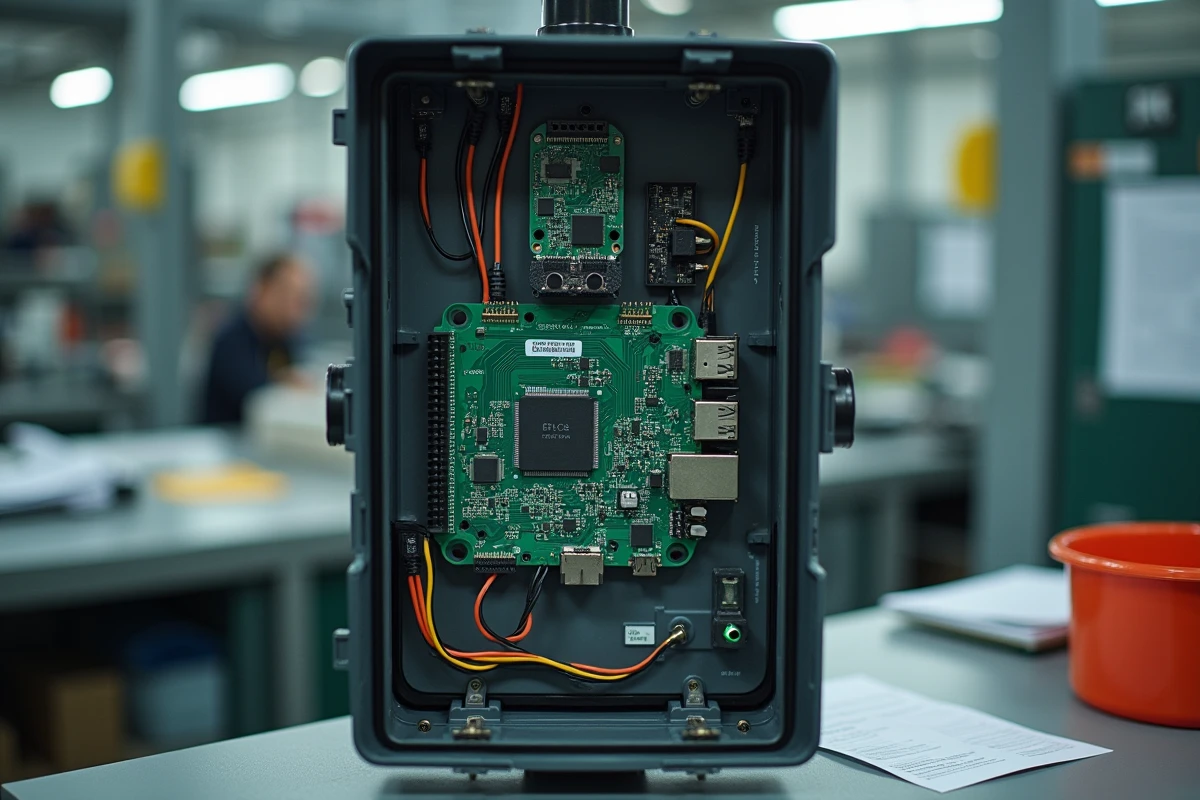
- A traffic controller compatible with centralized regulation protocols (DIASER or equivalent), the price of which has increased with the rising cost of electronics since 2022.
- Detection sensors (inductive loops, video detection, or lateral radar), each with its installation and maintenance constraints.
- A ventilated control cabinet, protected against surges, often sized to accommodate future extensions.
The choice between these two families results in a significant budget gap. A mobile solar reward light remains the least expensive option. A complete intersection with adaptive regulation and remote supervision falls into a completely different price range.
Cost increases since 2022: materials and electronics
Since 2022, industry players have reported a significant increase in the costs of controllers, cabinets, and poles for traffic lights. The rising prices of metals (galvanized steel, aluminum) and electronic components (semiconductors, control boards) have inflated project costs compared to historical estimates still cited online.
This inflation also affects civil engineering. The cost of trenches for the passage of power and communication cables directly depends on the price of asphalt and road labor, both under pressure.
Communities comparing recent quotes to references from before 2022 find discrepancies that can reach several thousand euros for a single intersection. We recommend never relying on a quote older than two years to establish a budget forecast.
Maintenance and preventive upkeep of an intelligent traffic light
Maintenance represents a recurring cost that decision-makers consistently underestimate. An intelligent traffic light requires more demanding maintenance than a fixed-cycle light, due to its sensors, embedded electronics, and network connection.
The main maintenance tasks include:
- Periodic replacement of LED modules and cleaning of optics, the frequency of which depends on exposure to dust and weather conditions.
- Verification and recalibration of detection sensors (loops, cameras, radars), especially after nearby roadworks.
- Software updates for the controller and the supervision system, often covered by an annual maintenance contract with the integrator.
- Maintenance of the control cabinet: ventilation, surge protection, condition of connections.
The annual maintenance cost can represent up to 10% of the initial installation cost. Over the lifespan of equipment (usually around fifteen years), the cumulative maintenance often exceeds the purchase price of the equipment itself.
For solar reward lights, maintenance additionally includes checking the photovoltaic panels and storage batteries, with a battery replacement cycle to be planned.
The choice of maintenance contract (preventive, corrective, or mixed with remote monitoring) directly influences the total cost of ownership. A contract with remote supervision and predictive maintenance costs more annually but reduces emergency interventions and downtime of the light, a road safety criterion that communities cannot overlook.