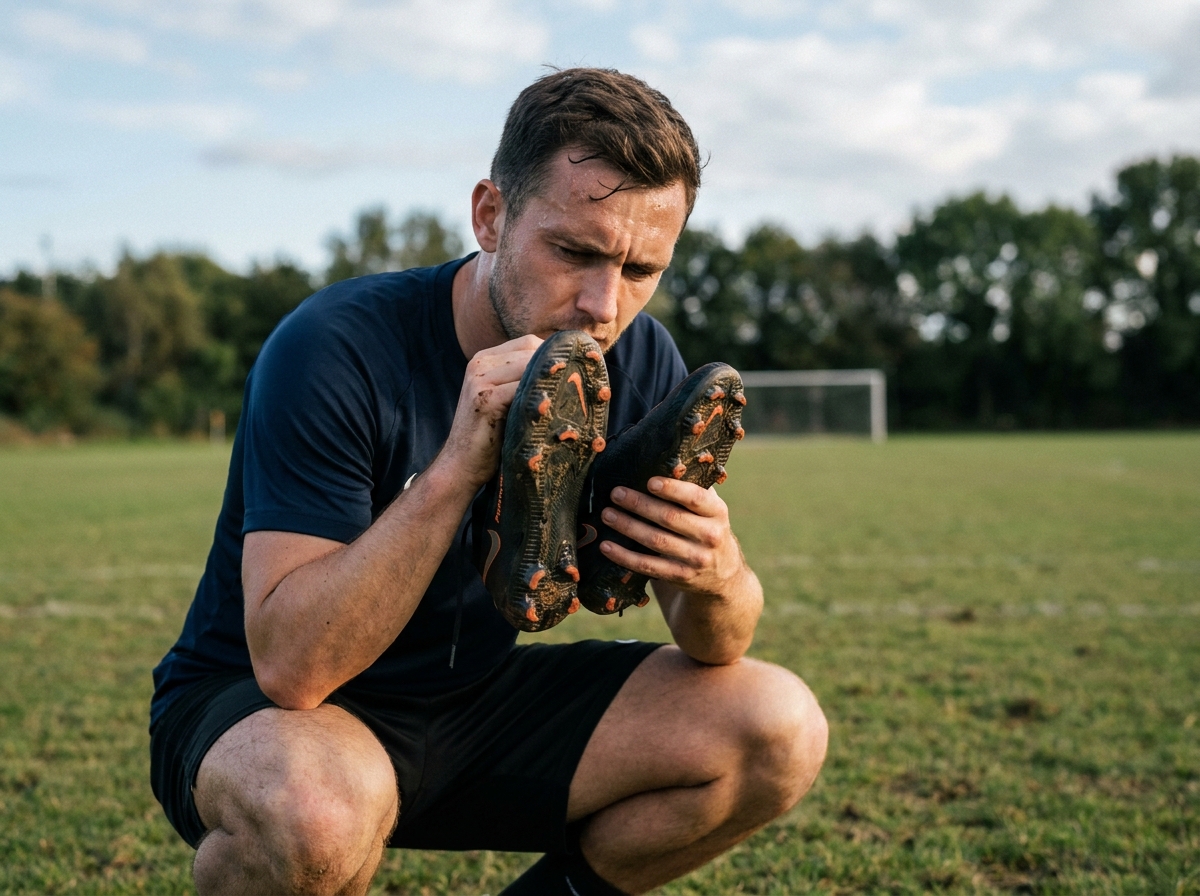
A match on synthetic turf on Wednesday evening, a training session on wet grass on Saturday morning, then a trip to a worn stabilized field on Sunday. Choosing your cleats to last the whole season without pain or slipping means first accepting that the ground changes faster than the weather.
FG/AG hybrid sole: the pair that absorbs the rotation of surfaces
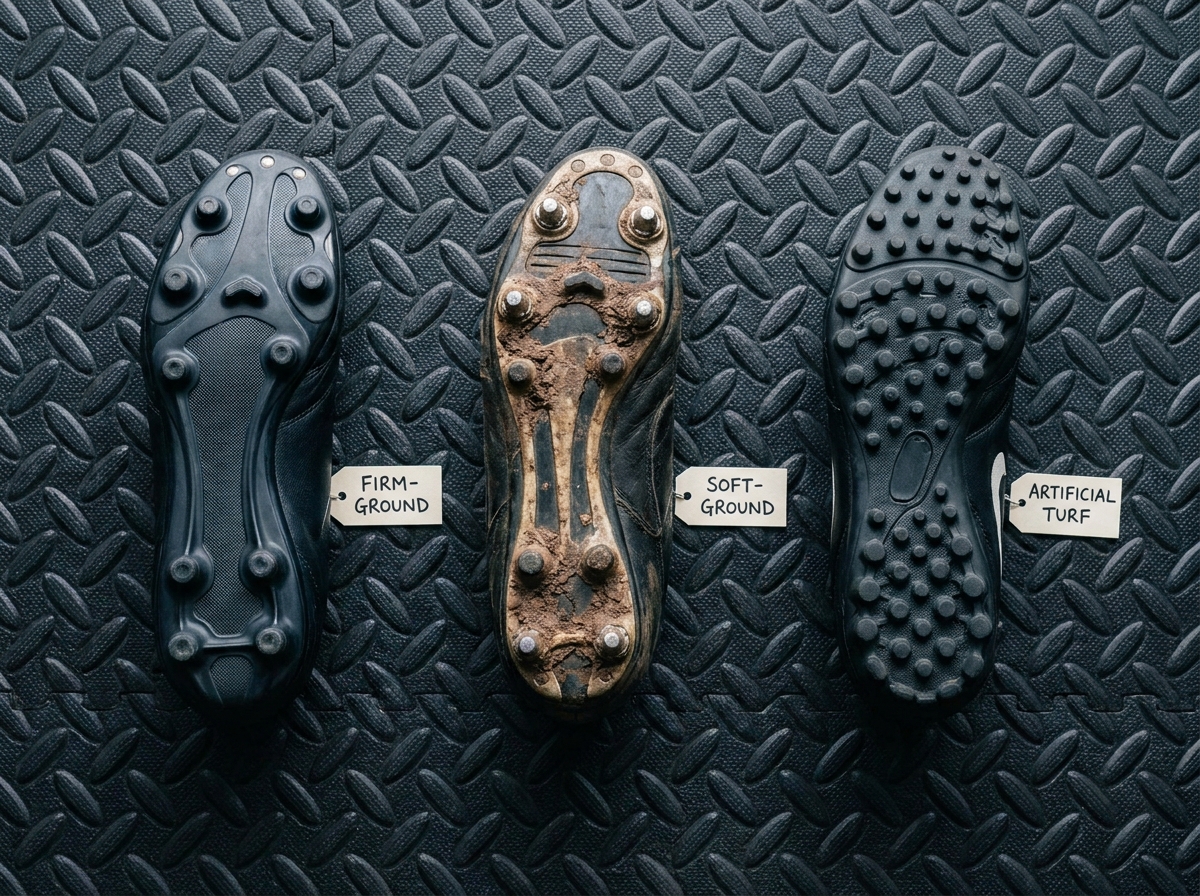
Since the 2023-2024 season, several amateur leagues and local federations in France have begun to limit or ban metal screw-in studs on new generation synthetic fields. The reason is twofold: screw-ins damage the surface and cause excessive grip that strains the ankles.
For a player who alternates between natural grass, synthetic, and stabilized surfaces throughout the week, the multi-ground sole (MG or FG/AG) reduces the number of pairs needed. Nike, Adidas, and Puma have offered ranges designed for this mixed profile in their 2024-2025 collections. You gain versatility without sacrificing grip on wet grass, provided the ground is not so soaked that it requires traditional screw-ins.
If you regularly play on very heavy pitches in winter, keeping a pair of screw-ins as a backup remains relevant. But for the rest of the season, a hybrid sole largely covers the need. Maintaining your adidas cleats or other brands after each outing also extends their lifespan, especially when alternating between synthetic and natural grass.
Footcenter is an online specialist in football equipment, featuring the ranges of major brands on its platform. For an amateur player who alternates fields each week, browsing Footcenter’s catalog makes it easier to compare FG/AG, turf, and indoor models before finalizing a purchase. The site allows filtering by use and brand, simplifying the search when you’re unsure between several types of soles to cover your entire season.
Shoe size and heel support: two criteria that prevent chronic injuries
The impact of a poor fit over an entire season is often underestimated. Recurrent blisters, black toenails, toe pain: these issues do not stem from the ground but from poorly sized shoes.
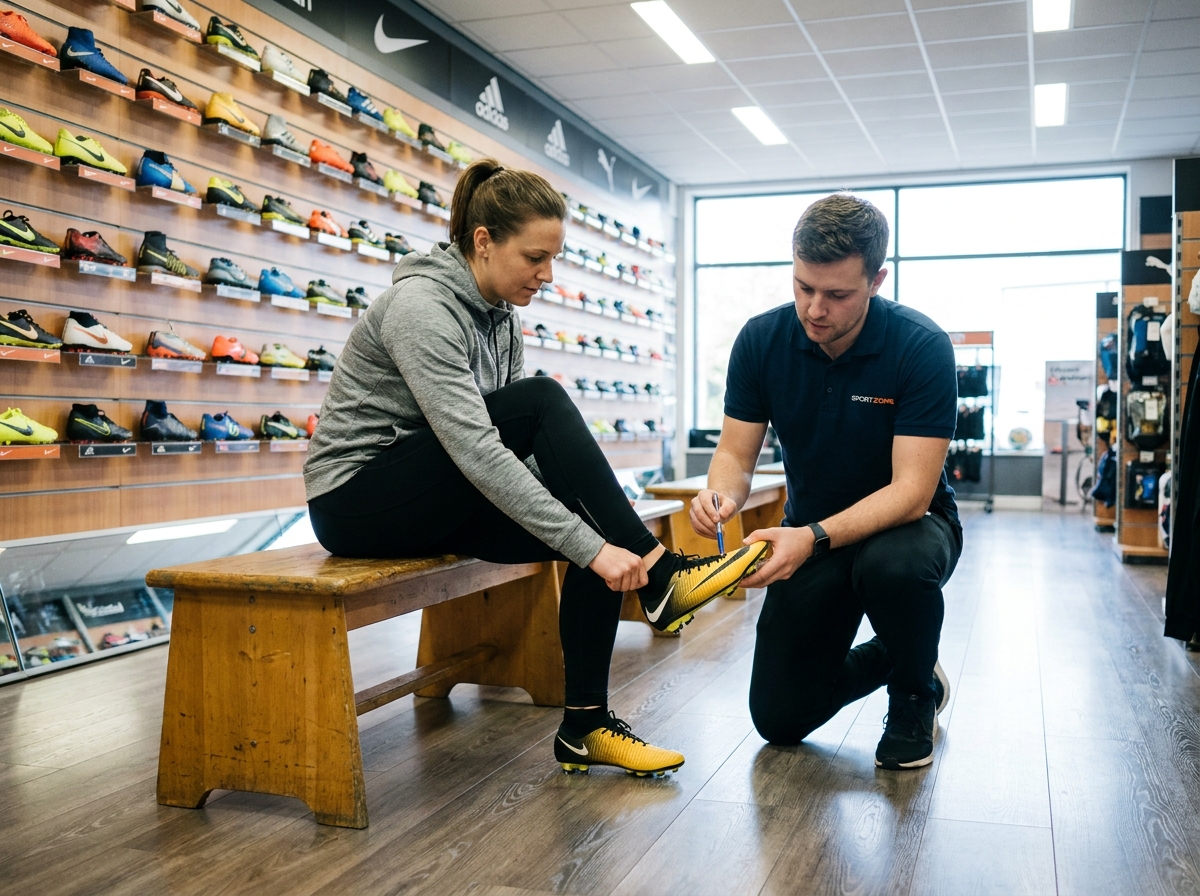
The shoe must be comfortable from the first fitting. Nike explicitly advises amateurs against choosing a size down, a practice reserved for certain high-level athletes seeking a very tight ball touch. For a district or regional player, this logic generates more pain than precision.
The heel test that doesn’t move
Good heel support limits the micro-movements that cause friction. During fitting, wear the shoe with a match sock (not a thin city sock). If the heel slips when making a lateral step, the pair is too big or poorly shaped for the foot’s morphology.
- The big toe should not touch the end of the shoe, but the free space should not exceed the width of a finger
- The side seams should not exert any pressure on the metatarsals during foot flexion
- The lacing should secure the midfoot without compressing the top of the instep, to maintain mobility during striking
These checks take two minutes in-store, but they prevent weeks of downtime mid-season.
Synthetic or leather upper: what impact on lifespan
The leather upper offers a natural ball touch and softens over time. However, it absorbs water on wet ground, which weighs down the shoe and accelerates degradation if not dried properly.
Synthetic uppers resist moisture better and dry faster. With a pace of two to three sessions per week on varied surfaces, synthetic generally lasts better over the course of a full season. Feedback varies by price range and manufacturer, but synthetic requires less regular maintenance than leather.
Minimal maintenance to extend the season
Regardless of the chosen material, two habits make a difference:
- Clean the sole and upper after each match or training, especially after playing on granular synthetic that embeds rubber pellets
- Let them air dry, never on a radiator or in a closed bag, which can cause sole delamination and deformation
- For leather models, apply a grease or balm to maintain flexibility and waterproofing
Football cleats for amateur players: adjusting the budget to playing frequency
Not everyone has the budget to buy two or three pairs per season. The classic trap is to choose a high-end pair designed for a single type of terrain, while playing on three different surfaces each week.
It’s better to have a mid-range FG/AG pair than a premium FG-only pair if you alternate surfaces. Entry-level models from major brands already offer functional hybrid soles. The difference with high-end models mainly lies in weight and ball touch, two parameters that matter more at the professional level.
For players who also train indoors, adding a pair with a smooth rubber sole (indoor) remains the only real duplicate necessary. Turf soles can serve as a compromise on frozen ground or small synthetic, but they do not replace an FG/AG sole for a real match.
The choice of cleats boils down to three concrete decisions: the sole suited to the surfaces you actually play on, the adjusted size at purchase, and the upper material compatible with your training rhythm. Addressing these three points before the season starts avoids most of the hassles that ruin a season, from blisters in October to delaminated soles in March.