
An outlet store sells products directly from a manufacturer or brand, bypassing a traditional distribution network. The items offered are end-of-line products, production surpluses, or previous collections, sold at a price lower than retail. In Gironde, this sales format has been structured around a few specific geographical hubs, each with its own characteristics in terms of range and operation.
Permanent clearance and factory sales: a useful distinction
The terms “factory store” and “clearance” are often used interchangeably, but they do not refer to the same thing. A factory store in the strict sense is linked to a manufacturer that sells its own production. The direct link with the industrial tool guarantees the origin of the items.
A clearance center, on the other hand, aggregates products from various brands purchased in bulk. The displayed discounts may be comparable, but the traceability differs. When a retail outlet brings together several brands under one roof, like Bord’eau Village in Bordeaux, the model resembles a brand village: each store manages its own stock of unsold items or end-of-line products.
This distinction has a direct impact on what the buyer finds on the shelves. In a true factory store, the replenishment depends on the manufacturer’s production schedule. In a multi-brand center, the supply varies according to the negotiated lots, making the offer less predictable but sometimes more diverse. To identify the factory stores in Bordeaux and Gironde that correspond to each model, one must check whether the brand sells its own production or aggregates third-party stocks.

Geography of factory stores in Gironde: three areas to know
The offer is not concentrated solely in the center of Bordeaux. Three sectors stand out for the density of their retail outlets and the types of products available.
Bordeaux city center and the quays
The Bassins à flot area and the left bank quays host the most visible formats. Bord’eau Village remains the main brand village of the metropolitan area, with an offer that covers fashion, accessories, and home goods. The Delsey Factory Store, specializing in luggage, also operates as a true factory store linked to its manufacturer.
Mérignac and the first western crown
Mérignac concentrates several brands focused on sports and children’s fashion. The Nike Factory Store offers models from previous seasons at reduced prices. Kids Around Outlet targets family audiences with clearance of children’s brands. These retail outlets benefit from easy parking typical of peripheral commercial areas, a practical criterion that the city center cannot offer.
Bassin d’Arcachon and southern Gironde
The density of factory stores is lower than in Bordeaux, but each outlet has a marked specialization, justifying the trip for a targeted purchase. Some businesses combine clearance with seasonal activity related to tourism in the Bassin.
What is changing for unsold textiles: regulations and consequences in stores
French legislation now prohibits the destruction of unsold non-food items. Redistribution, resale, and recycling become the mandatory exit routes for excess stocks. At the European level, the framework for extended producer responsibility for textiles (REP textile) is also strengthening, with deadlines imposed on member states.
For consumers in Gironde, these developments have a concrete consequence: the volumes available in factory stores could increase as brands seek alternative outlets to destruction. Outlets and clearance centers are absorbing a growing share of these flows.
This does not mean that all unsold items will end up on the shelves. Exceptions remain for certain products (cosmetics, regulated items), and luxury brands often prefer closed circuits. But for textiles, footwear, and home goods, direct sales formats in Gironde are well positioned to capture these redirected stocks.
Criteria for distinguishing a good deal from a false discount
Not all factory stores offer the same level of actual discount. A few criteria allow for evaluating the relevance of a purchase before checking out.
- Check the displayed reference price. A crossed-out price is only valuable if it corresponds to the price actually practiced in a traditional store. Comparing with the official brand website provides a reliable benchmark.
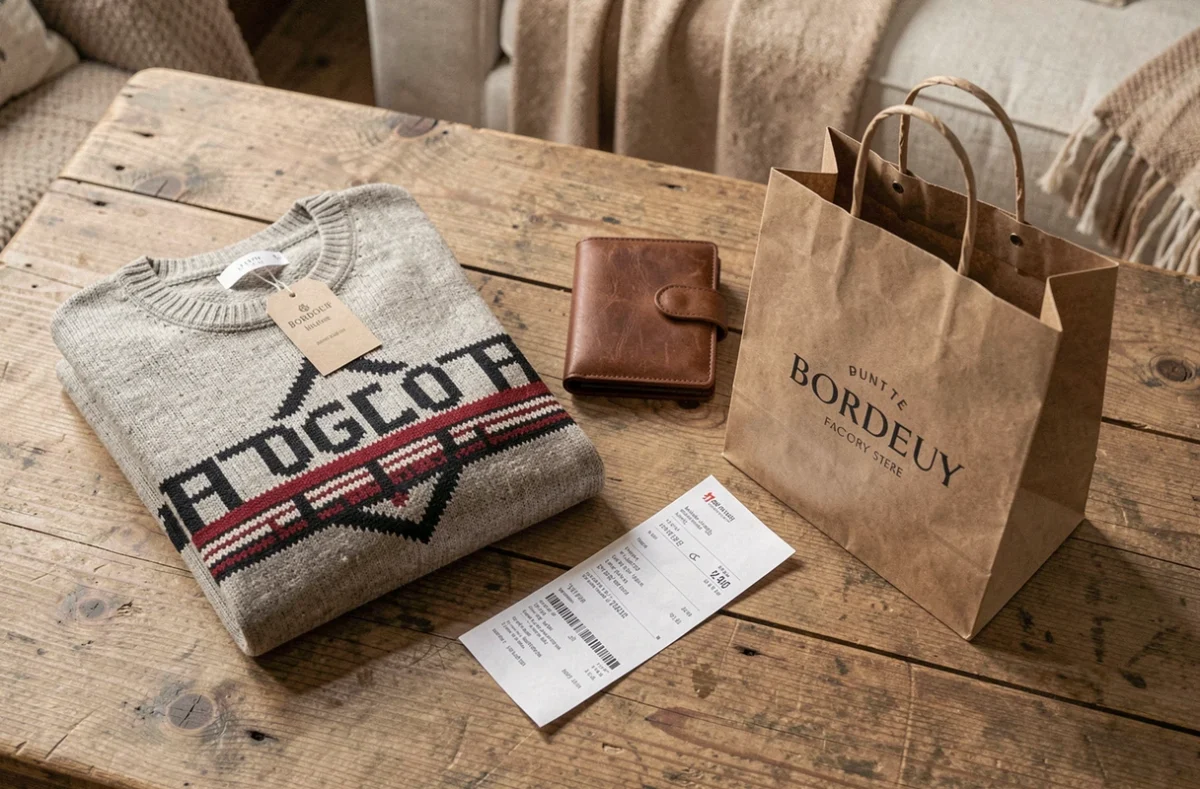
- Examine the labeling: an item made specifically for an outlet (with “made for outlet” mention or different label) is not an unsold item from the collection. The quality of materials or finishes may differ from the product sold in traditional retail.
- Observe the regularity of restocking. A factory store that renews its stock in line with the manufacturer’s seasons offers genuine end-of-line products. A stock that has been stagnant for several months may indicate a bulk purchase, not recent production.
- Prefer mono-brand stores for technical purchases (luggage, sports equipment), where product traceability has a direct impact on warranty and after-sales service.
The combination of these checks takes a few minutes per item. On a fashion or home goods purchase, the difference between a real discount and an inflated then crossed-out price can represent a significant part of the budget.
The factory stores in Gironde cover a wide spectrum, from Delsey luggage to sports fashion at Nike Factory Store. The format remains relevant as long as one knows what they are looking for and verifies the actual origin of the items offered. With the tightening of rules on unsold items, this offer has good reasons to expand in the coming years.