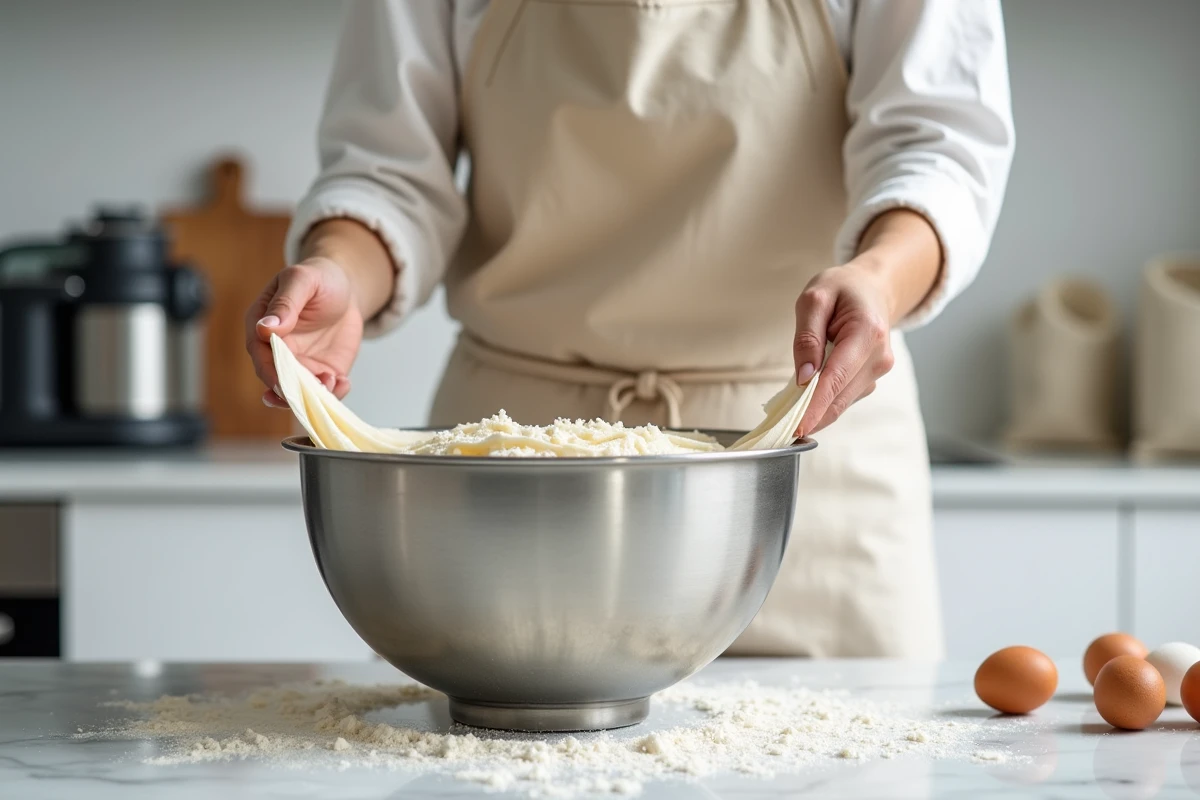
The Joconde biscuit serves as a flexible base for most classic desserts, from opera to royal chocolate. Making this preparation with the Thermomix raises a specific question: can the machine, designed for mixing and heating, produce a batter that is sufficiently aerated without deflating the whipped egg whites? The answer depends on specific settings and an order of incorporation that standard recipe cards do not detail.
Joconde Biscuit with Thermomix or Stand Mixer: Which Method for Which Texture
The Joconde biscuit recipes available online are almost all calibrated for a stand mixer with a whisk or for manual work. The Thermomix, with its rotating blades and closed bowl, changes the game on two parameters: the incorporation of air and the risk of over-mixing.
| Criterion | Stand Mixer (whisk) | Thermomix |
|---|---|---|
| Aeration of egg whites | Very good (dedicated whisk) | Possible with the butterfly whisk, but slightly lower volume |
| Mixing tant-pour-tant + eggs | Spatula or whisk, direct visual control | Low speed (2-3), risk of over-mixing if duration is too long |
| Incorporation of melted butter | Manual with a spatula | Manual with a spatula (outside Thermomix bowl) |
| Incorporation of whipped egg whites | Manual with a spatula | Manual with a spatula (outside Thermomix bowl) |
| Main risk | Over-beaten whites (grainy) | Loss of aeration due to excessive mechanical mixing |
The table highlights a point often overlooked: the Thermomix does not replace the spatula for the last two incorporations. Using the machine to mix the egg whites into the batter results in deflating the mixture. The part that pertains to the Thermomix is limited to grinding the almond flour with the sugar, mixing the eggs with the tant-pour-tant, and whipping the egg whites with the butterfly whisk.
To delve deeper into each step with detailed proportions, a Joconde biscuit recipe for Thermomix allows you to follow the complete process adapted for this machine.
Thermomix Settings for Tant-pour-tant and Whipped Egg Whites
The first step is to obtain a fine tant-pour-tant. Store-bought almond flour often has an irregular grain size. Mixing the almond flour with the powdered sugar for a few seconds at high speed refines the grain and produces a homogeneous mixture, which a classic stand mixer does not achieve.
Preparing the Tant-pour-tant
Place the almond flour and powdered sugar in the bowl. Mix briefly at progressive speed. The result should be a very fine powder, with no visible lumps. Then add the whole eggs and mix at moderate speed until you obtain a smooth and slightly thick batter.
Whipping the Egg Whites with the Butterfly Whisk
Transfer the batter to a mixing bowl. Clean the bowl, install the butterfly whisk, and then whip the egg whites with the granulated sugar. The butterfly whisk aerates less than a classic mixer. To compensate:
- Use egg whites at room temperature, which whip more easily
- Add the granulated sugar gradually, in two or three additions, once the egg whites are foamy
- Stop as soon as the egg whites form a soft peak, not stiff, as overly stiff whites mix poorly with the almond batter
Soft egg whites incorporate better than stiff whites into a batter that is already dense. This detail makes the difference between a soft biscuit and a compact sheet.
Baking and Spreading the Joconde Biscuit on a Sheet
The thickness of the spreading determines the final texture. A Joconde biscuit that is too thick will be spongy instead of soft. If too thin, it will tear when unmolding.
Spread the batter to a consistent thickness of about half a centimeter on a baking sheet lined with parchment paper or a silicone mat. Use a bent spatula in one motion, without going back, to avoid deflating the incorporated air.
Baking Temperature and Time
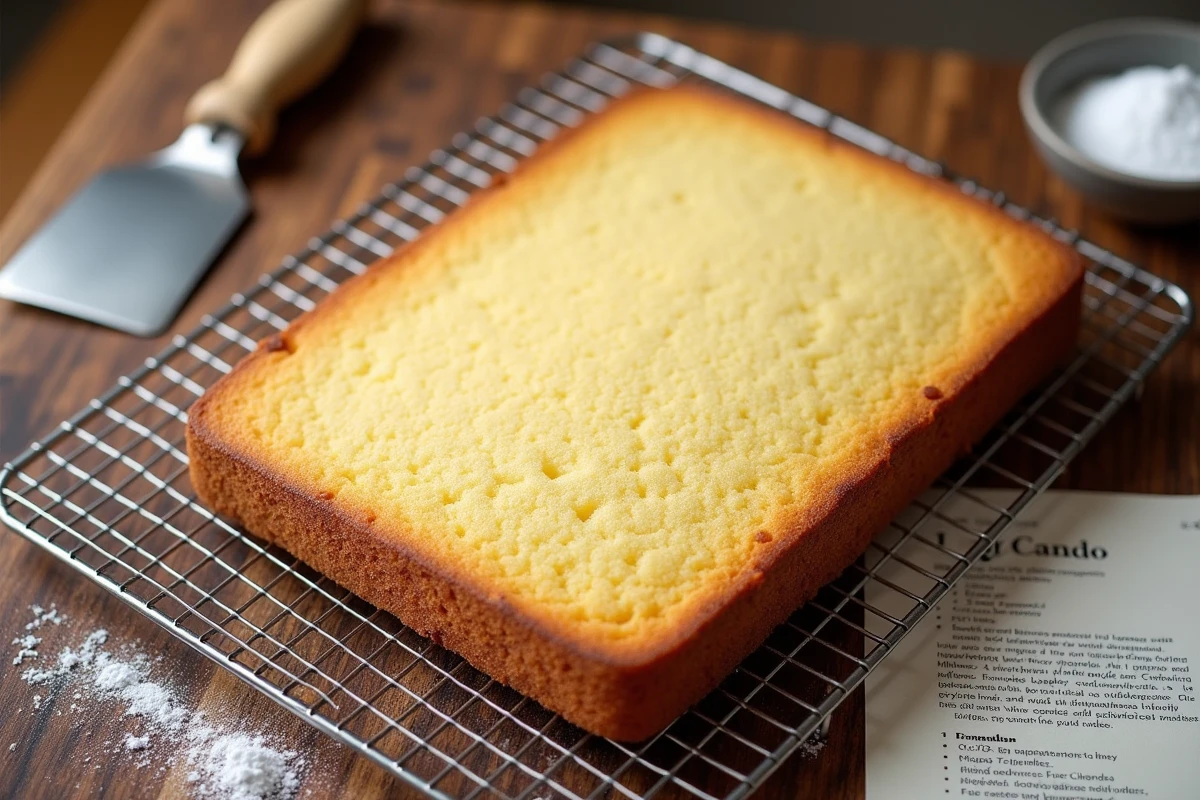
Bake in a hot oven. The biscuit is ready when the surface is golden and the batter springs back after a light touch. Remove the sheet and immediately turn the biscuit onto a rack to avoid condensation, which would make the base damp and sticky.
Two common mistakes often arise from feedback:
- Baking without sufficient preheating, resulting in a dry surface and raw center
- Letting the biscuit cool on the sheet, which traps moisture under the baking sheet
- Opening the oven door during baking, which causes the airy structure to collapse
Joconde Biscuit in an Opera or Dessert: Adapting the Batter
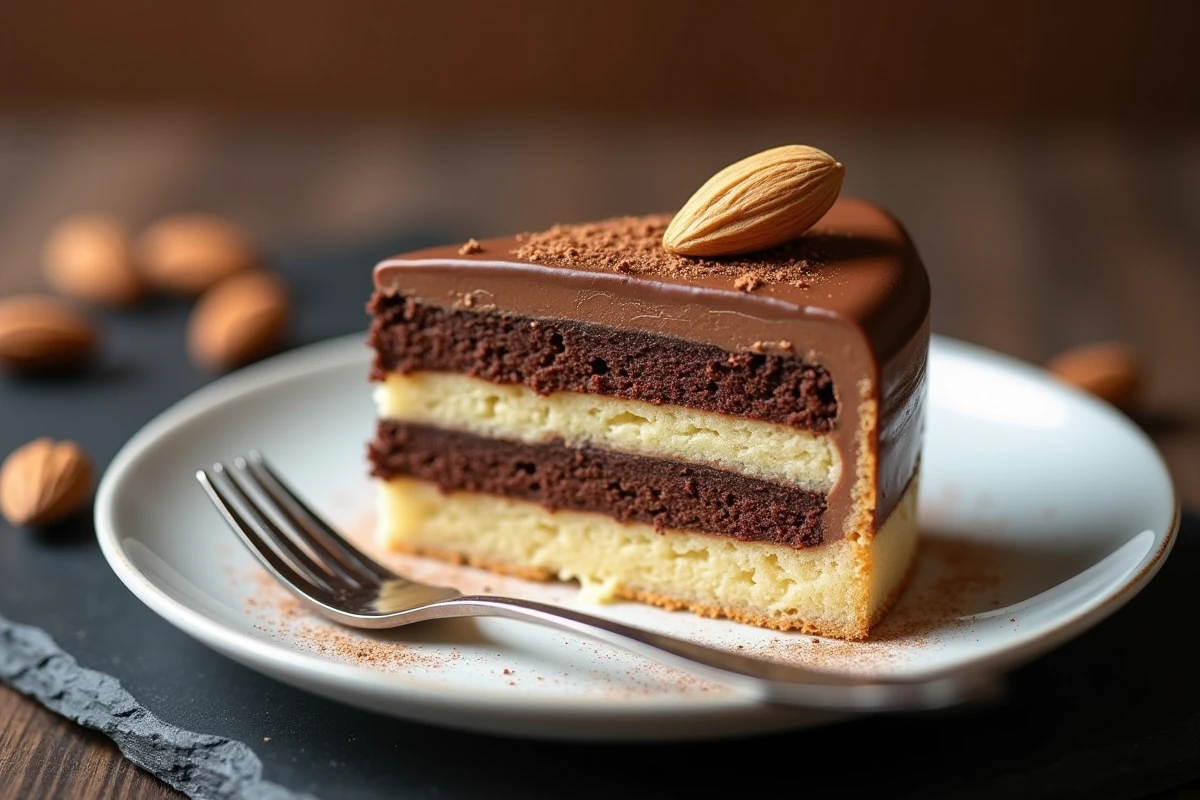
The Joconde biscuit serves different functions depending on the dessert. In an opera, it is soaked in coffee syrup before being layered with buttercream and ganache. In a fruit dessert, it acts as a neutral structure, sometimes flavored with vanilla or citrus zest.
Adapting the soaking syrup to the intended assembly changes the final perception. A syrup that is too sweet masks the almond flavor. A syrup that is too light leaves the biscuit dry after several hours in the refrigerator. The right balance is to soak without making it soggy: the biscuit should absorb the syrup in a few seconds without becoming translucent.
For a classic opera, concentrated coffee syrup brings the bitterness that balances the ganache and buttercream. For a lighter dessert, a syrup made from water and sugar is sufficient.
The Joconde biscuit made with the Thermomix offers the same result as a classic method, provided that one simple rule is followed: the machine prepares the batters, the spatula assembles them. Trying to do everything in the bowl systematically results in a deflated batter. By separating the two actions, the Thermomix saves time on grinding and mixing without compromising the airy texture of the final biscuit.