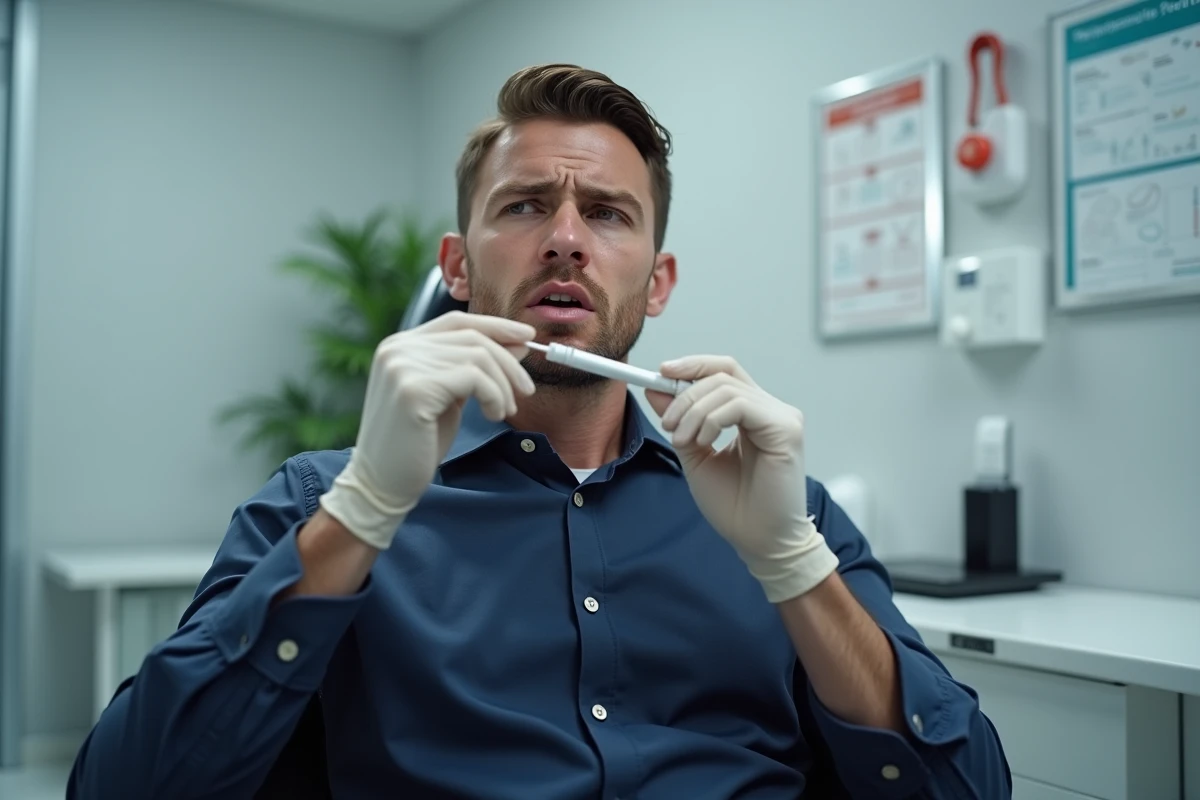
A simple slip, and life turns upside down: cocaine, detectable in saliva for up to 48 hours after consumption, leaves little room for approximation. However, each body reacts in its own way, and the interval stretches or contracts depending on individual habits and physiology.
The rules in France are clear but unforgiving. A positive roadside test means immediate measures. Sometimes, chance intervenes: erroneous results muddle the situation, making it difficult to navigate.
Saliva testing: operation, usefulness, and detected substances
On the side of the road, the saliva test has become the preferred tool for drug screening. This is no coincidence: it is quick, minimally invasive, and can be used without delay. In practice, a strip placed in the mouth is sufficient: a few seconds, and the sample is ready to be analyzed on-site using a portable device.
Police officers and gendarmes use these saliva screening tests to identify various substances. On their radar: cannabis (THC), cocaine, opiates, amphetamines, methamphetamines. Cocaine, for its part, offers a quick signature: its presence in saliva can be detected even after a single use. This type of test therefore targets recent use, a central criterion for assessing a driver’s ability to control their vehicle.
A positive saliva test result immediately triggers a series of measures, both administrative and judicial. In the vast majority of cases, reliability is assured, but there remain margins of uncertainty, false positives or false negatives depending on the substances or mode of consumption. The detection duration of cocaine in saliva varies according to numerous parameters, detailed in the analysis ‘Positive saliva test: how long after – science and limits of precision – Seniors Actu’. Metabolism, frequency of use, ongoing treatments: everything counts.
Using the saliva drug screening test is acting for collective safety, but it also means accepting the imperfections of a technical tool and the risks of interpretation. Each control, each test, each decision raises the question of the balance between prevention, sanction, and respect for individual freedoms.
How long does cocaine remain detectable in saliva?
The detection duration of cocaine in saliva intrigues both health professionals and legal experts. Unlike blood or urine, saliva is a witness to recent consumption. From the moment of absorption, the molecule circulates quickly, before being eliminated in a few hours or days, depending on the circumstances.
For occasional users, cocaine is generally detectable by saliva test for 24 to 48 hours. This timeframe varies according to the amount taken, the body’s functioning, frequency, and also the type of test used. Current devices look for the main molecule, sometimes its metabolites.
Here’s what to remember regarding the detection duration:
- After a single use, cocaine generally disappears from saliva in less than 48 hours.
- For those who consume regularly, the window can extend up to 72 hours, according to observed cases.
Whether it’s crack or powder, the duration of presence in saliva remains comparable. But every body is unique: hepatic metabolism, hydration levels, and the intake of other substances can alter the outcome. Saliva screening tests therefore indicate a range, without providing absolute certainty for each individual.
This observation is unanimous: detecting cocaine in saliva only indicates recent use, without allowing for precise quantification of the amount absorbed or accurately dating the event.

Positive saliva test result: what consequences and possible sanctions?
Finding oneself with a positive saliva test for cocaine during a roadside check instantly disrupts the driver’s daily life. The agents apply the procedure straightforwardly. According to the highway code, a positive test requires the immediate immobilization of the vehicle and a summons for a blood test to confirm the presence of the drug. It is this blood test, and only this one, that holds weight in court.
The French law does not compromise: any trace of narcotics while driving constitutes an offense, even in the absence of dangerous driving. The consequences are direct:
- six points deducted from the driving license
- fines up to 4,500 euros
- suspension or revocation of the license
- prison sentence of up to two years
- possible confiscation of the vehicle
This path of sanctions is accompanied by guarantees for the defense. Any contestation can be presented before the judicial court. In the event of recidivism, the sanctions escalate, especially if other offenses are noted, such as alcohol intoxication or lack of insurance. The jurisprudence regularly reminds that law enforcement must ensure the reliability of the saliva test and the transparency of the procedure.
Behind the wheel, there is no margin for error: vigilance, on the other hand, is non-negotiable.