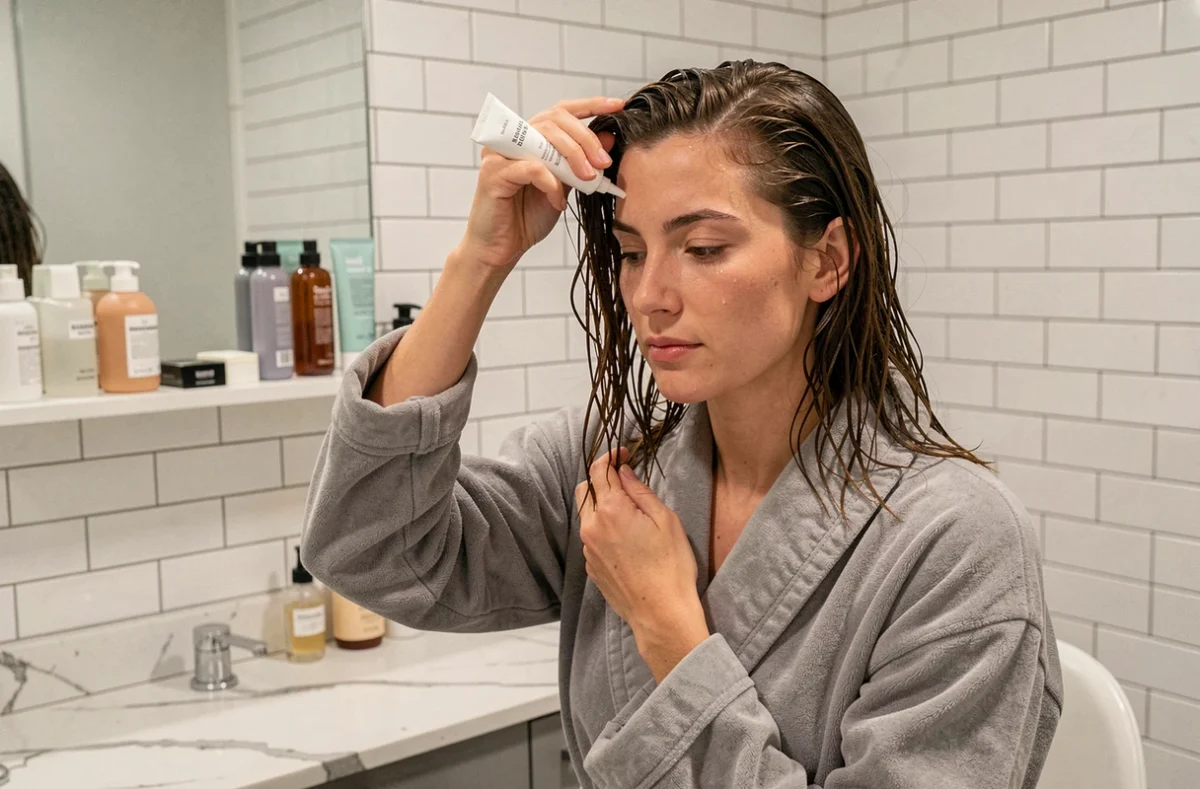
Vermogal is discussed on forums as a remedy for hair loss. However, online discussions conflate two distinct problems: pediculosis (head lice infestation) and alopecia. Available sources on this product mainly refer to its use as an antiparasitic treatment, with no published clinical evidence of an effect on hair loss. Before applying anything to your scalp, the first step is to correctly identify the underlying hair problem.
Head lice or hair loss: two diagnoses Vermogal does not treat in the same way
Confusion between head lice infestation and hair loss fuels many of the testimonials about Vermogal. The symptoms can overlap: an itchy scalp, a feeling that the hair is fragile, and hair falling out when brushed. The distinction depends on specific signs.
A head lice infestation is confirmed by the presence of a live louse on the scalp. Nits attached near the roots of the hair are an additional clue. Hair loss, on the other hand, appears as diffuse or localized thinning, with no visible signs of parasites.
Applying an antiparasitic product to a scalp affected by alopecia means treating a problem that does not exist while exposing the skin to unnecessary active ingredients. Recent public health recommendations advise treating only people in whom live lice have been found, rather than using a product preventively.
A detailed guide to using Vermogal for hair care explains this distinction and the precautions to take for different hair types.

Vermogal: ingredients and precautions before application
The product is generally sold as a gel or ointment to be diluted. Forum users describe mixing a small amount of gel with water and applying it to the roots. This homemade method raises concerns about dosage.
Check the instructions before use
The ANSM leaflet often cited in search results actually relates to Prioderm, a malathion-based product. Its instructions cannot be applied to Vermogal, which has a different composition. Before applying anything, check the active ingredient, concentration, and contraindications on the packaging of the exact product you have.
If the packaging does not clearly state a therapeutic indication, or if the product was purchased outside the pharmacy supply chain, asking a pharmacist for advice is the minimum precaution.
Risks to the eyes and sensitive scalp
User testimonials repeatedly emphasize one point: contact with the eyes causes intense irritation. Avoid applying the product to the forehead, temples, or area around the eyes.
- Protect your eyes with a headband or towel while the product is on
- Rinse thoroughly with clean water if accidental contact occurs
- Do not apply to a scalp with sores, scabs, or active dermatitis
- Avoid use on young children without first seeking medical advice
Application frequency and duration: what users say
Since no official instructions for Vermogal are readily available, the information comes from online user experiences. The table below summarizes the practices most commonly described.
| Parameter | Common practice (forums) | Precautionary recommendation |
|---|---|---|
| Frequency | Once a week | Do not apply more than once a week without medical advice |
| Leave-on time | At least 2 hours, sometimes overnight | Start with 2 hours and observe how your scalp reacts |
| Application area | Roots only | Never apply to the lengths or ends |
| Rinsing | Varies (some users do not rinse) | Always rinse after application |
Some users describe applying a small amount daily without rinsing. This practice is not supported by any medical source and may cause potentially irritating residue to build up on the scalp.
When to see a doctor instead of self-treating
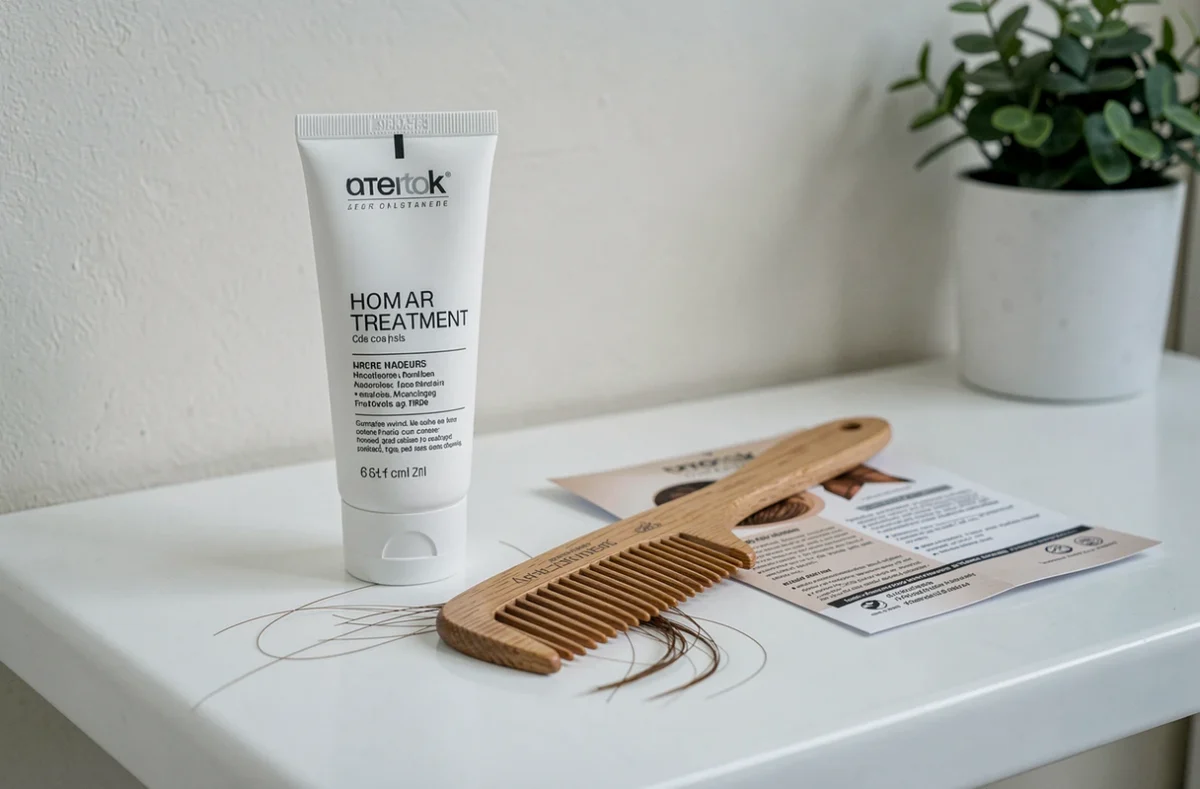
Using Vermogal as a hair loss treatment is based on individual testimonials, not published clinical studies. In several situations, you should consult a dermatologist or general practitioner before continuing to apply the product.
- Hair loss that has lasted more than three months without improvement
- Bald patches (alopecia areata), which require specific medical treatment
- Persistent itching after using the product
- A scalp that becomes red, flaky, or develops scabs after application
Persistent hair loss warrants a medical diagnosis rather than a trial of an antiparasitic product. Alopecia can have hormonal, nutritional deficiency-related, or autoimmune causes that require blood tests and a clinical examination.
The pitfalls of online self-diagnosis
Forums are full of enthusiastic testimonials about Vermogal, with before-and-after photos and promises of regrowth. These accounts cannot isolate the product’s effect from confounding factors such as dietary changes, stopping an aggressive treatment, or the natural hair growth cycle.
Vermogal’s regulatory status varies by country. In Morocco, where the product is commonly sold, its classification (cosmetic, medical device, or medicine) determines the efficacy evidence requirements it must meet. This status has not been verified in the available sources.
The lack of clinical data does not mean the product is ineffective. It means that, as things stand, there is no published evidence to support recommending Vermogal as a treatment for hair loss. For antiparasitic use, apply the product only after visually confirming an infestation, and use a fine-toothed lice comb to remove the nits after rinsing. For anything else, seek medical advice.