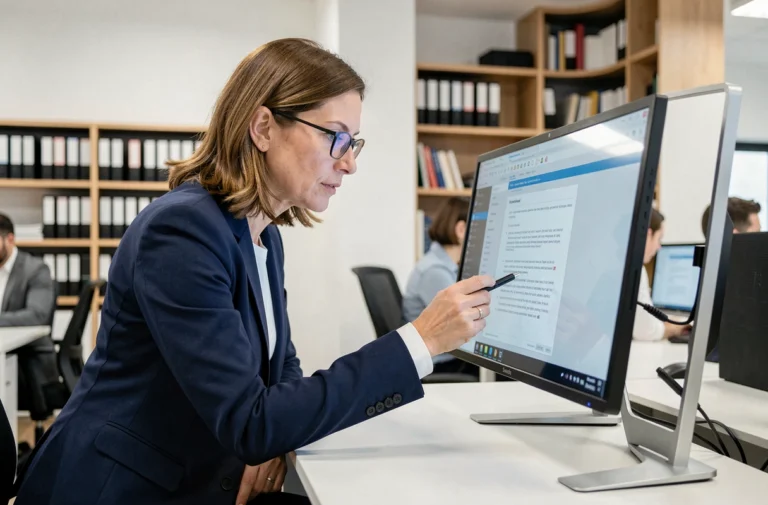
A stack of binders will no longer suffice. Ten years of retention for accounting documents is the rule. But in reality, the situation is quite different: firms are overwhelmed with scattered files, outdated spreadsheets, and streams of documents split between paper, PDF, and multiple platforms. Under these conditions, it is impossible to guarantee the expected availability or reliability. Daily management becomes burdensome, errors loom, compliance wavers, and the stress of audits intensifies.
In this context, the automation and centralization of tools are no longer just an asset: they become the engine of solid accounting management. Publishers are doubling their efforts to provide solutions capable of keeping pace with regulatory demands, volume, and the quest for efficiency.
Accounting Document Management in the Digital Age: Challenges and Stakes for Firms
Exploding data, multiple formats, heightened regulatory requirements: accounting document management resembles a permanent test of strength. The GDPR allows no approximation, traceability is essential, and no excuse can justify even the slightest breach in data security. Yet, at a time when invoices, contracts, statements, and receipts circulate via emails, portals, or sometimes still by mail, each additional step prolongs the timeline and multiplies the chances of errors.
This is why there is a growing interest in the digitization of accounting processes. Automation of data collection, intelligent archiving, data extraction: document management tools promise a beneficial upheaval. Take the example of supplier invoice dematerialization: it prioritizes security, accelerates validations, and streamlines the entire processing chain.
However, integrating a tool is not just about ticking a box. Everything hinges on compatibility with the existing ecosystem, accessibility for all, and the teams’ ability to embrace the digital shift. Automating also means redeploying human resources: less time wasted on tedious tasks, more availability for analysis and advice. Thus, digitization shapes new standards for optimizing financial processes.
Which Automation Tools to Choose to Simplify the Daily Lives of Accountants?
Relieving accountants of repetitive tasks requires sharp solutions designed to transform a mountain of documents into reliable data. Modern platforms rely, among other things, on optical character recognition (OCR) to automatically decode invoices, expense reports, and bank statements. The result: key information integrates effortlessly into accounting software, limiting re-entry and eliminating many risks of error.
Some software takes it a step further with the addition of artificial intelligence. Automatic allocation, account assignment, advanced VAT management, and bank reconciliations then become the norm. The most current ERPs combine document automation and analytical power while maintaining a smooth and secure flow of information.
These solutions stand out for several decisive advantages:
- Automated accounting entry: extracted amounts and identified suppliers without manual intervention, with integrated checks.
- Connection with existing software: data flows feed directly into the system, ensuring continuity and reliability.
- Enhanced security: complete traceability and fewer human errors at every step.
Not only do these technologies relieve firms of tedious tasks, but they also free up time for what matters: support, strategic advice, and financial management. The result: teams focused on the essentials and stronger accounting management in the face of new professional demands.

Practical Advice and Support to Adopt the Most Suitable Solution for Your Business
Choosing a solution to optimize accounting document management requires method and clarity. The first step: closely analyze your flows, map the existing situation, and identify all friction points. Accountants can thus refine their criteria by addressing the central question of compatibility with their current tools.
Personalized support remains a decisive asset. Success depends on adapting the system to the size of the firm, the number of users, and the requirements related to security and GDPR. Teams that enhance their skills through continuous training navigate the deployment phase much more smoothly. Responsive technical assistance and educational resources also play a key role.
Some reflexes facilitate an effective transition:
- Launch an experiment on a limited scope to adjust settings.
- Conduct regular audits on automated processes to detect and correct discrepancies.
- Keep track of regulatory developments, particularly around data security, to stay ahead.
Professionals have understood: the future of accounting lies in tools that integrate seamlessly and ensure the reliability of every document flow. Relying on seasoned partners means betting on freed-up time, highlighted expertise, and strengthened client relationships. The next audit? It will no longer be synonymous with stress, but simply a click away with impeccable traceability.