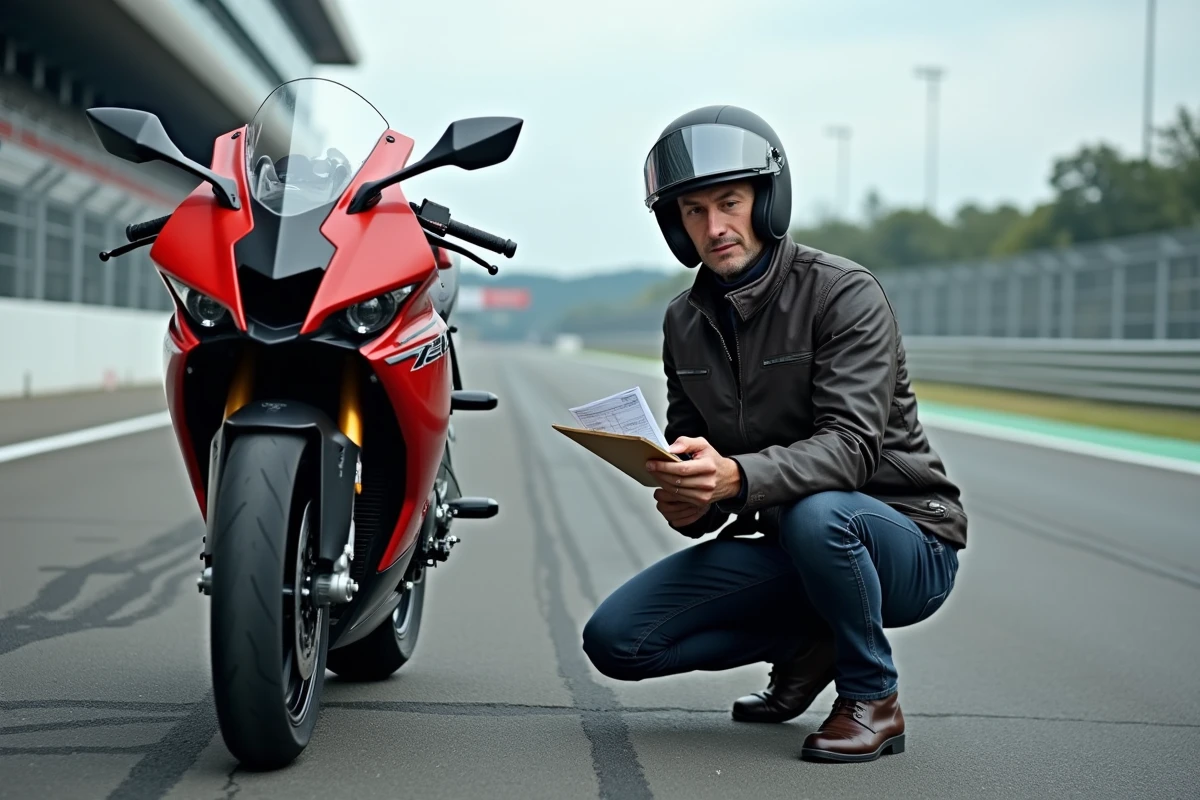
Comparing two motorcycles on a technical sheet takes five minutes. Understanding which one will actually perform better on your daily commute or your track session requires a completely different approach. The raw data of power and torque only tells part of the story, and online comparisons often limit themselves to aligning numbers without providing context. This guide outlines the concrete criteria that help distinguish between two models when moving from paper to the road.
Usable Performance: Why Maximum Power is No Longer Enough
We’ve all seen a comparison chart displaying peak power and maximum torque of two motorcycles side by side. The natural reflex is to look at the highest number. On the track, in perfect conditions, with a rider who exploits every rev, that holds true.
On a wet country road on a Tuesday morning, the situation changes. What matters then is the usable performance in your real conditions. A mid-displacement roadster equipped with a 6-axis inertial measurement unit, cornering ABS, and calibrated traction control allows for later braking and earlier throttle application than a more powerful sportbike that lacks advanced electronics.
Recent comparisons confirm this trend: in rain or on uneven surfaces, advanced electronic aids (riding modes, anti-wheelie, adaptive cruise control) sometimes reverse the raw performance hierarchy. For an intermediate rider, a well-assisted model often turns faster and more consistently than a model that is more “performant” on paper. You can now consult a motorcycle duel and performance on Zeperf to compare acceleration and response data between two machines and measure this gap.
Motorcycle Comparison: Criteria That Technical Sheets Don’t Show
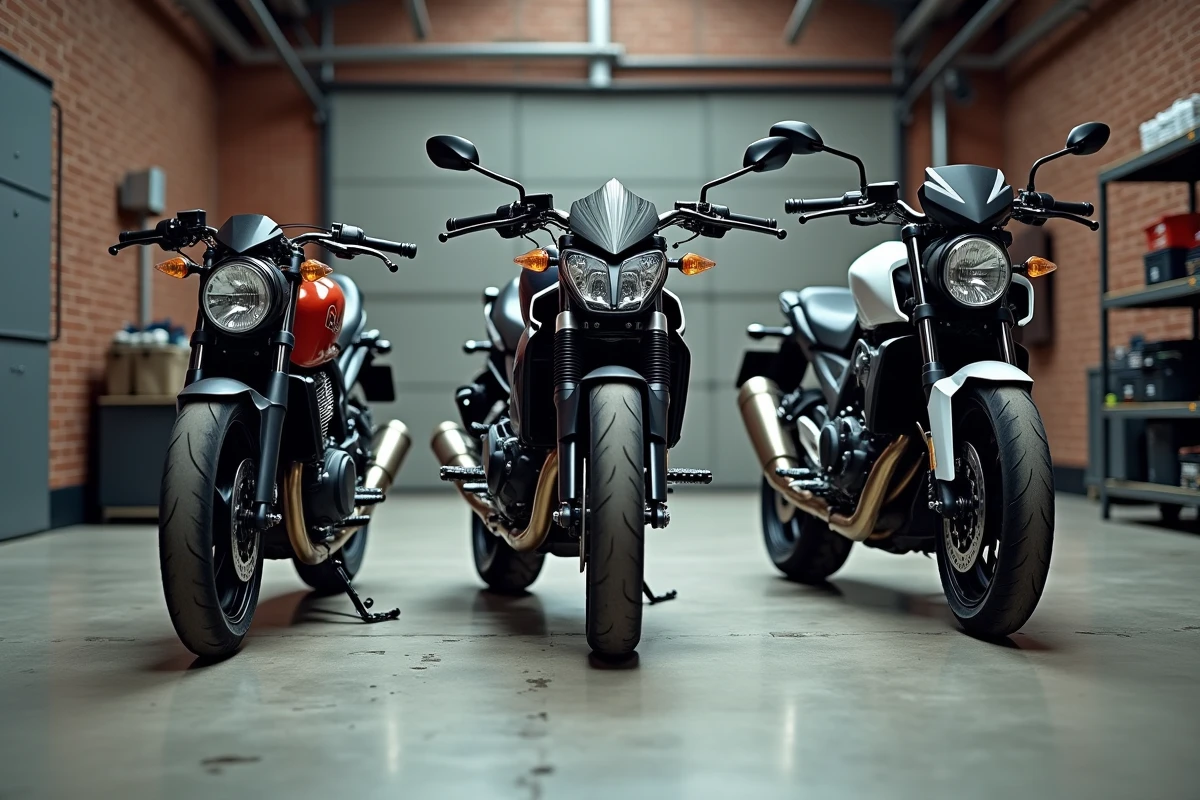
A good comparison goes beyond the “horsepower” or “Nm of torque” line. Here are the parameters that truly make a difference at the handlebars and that most guides overlook.
- The torque curve at mid-range, not just the peak. A motorcycle that delivers its torque between 3,000 and 6,000 rpm will be more enjoyable in the city and on the road than a model that concentrates all its power at the top of the rev range.
- The real weight-to-power ratio, with a full tank and all fluids topped off, not the “dry” weight displayed by the manufacturer. The difference can reach several dozen kilograms depending on the models.
- The height and shape of the seat relative to your build. A “comfortable” trail bike with a seat height over 850 mm may not suit everyone, regardless of its technical sheet.
- The cost of regular maintenance (chain, brake pads, tires, service intervals) which varies greatly from one manufacturer to another and weighs as heavily as the purchase price on the total budget.
When comparing a Honda, a Yamaha, or a BMW Motorrad, these criteria differentiate the models much more effectively than raw power. Honda remains a reference in reliability and moderate maintenance costs. Yamaha often offers a good balance between engine character and versatility. BMW Motorrad focuses on long-distance comfort and onboard technology.
Impact of Euro 5 on the Choice of a Motorcycle Model
The Euro 5 regulation, followed by its gradual tightening in the form of Euro 5+, has reshaped the offering in concrete ways. Some iconic sportbikes have disappeared from the catalog or have been restricted. Mid-displacement engines, between 600 and 800 cc, have been reworked to provide more torque at mid-range at the expense of maximum power.
For us riders, this means two things. First, recent models homologated Euro 5+ are generally more enjoyable at low and mid-range than before. Second, top speed and peak power are no longer relevant indicators for comparing a 2024 model to a 2020 model of the same family.
If you are looking for a motorcycle for mixed use (city, road, some curves on weekends), the Euro 5+ mid-displacement engines now cover the majority of needs without the unusable over-power of large sportbikes of the past. Feedback varies on the sound character of these new engines, but in terms of pure road performance, the progress is clear.
Which Models Are Disappearing, Which Are Emerging
Large atmospheric four-cylinder engines over 1,000 cc are the most affected by the regulations. Several manufacturers have chosen to discontinue certain models rather than invest in costly compliance updates. Meanwhile, motorcycles from 700 to 900 cc are stepping in with improved performance and a more accessible purchase budget.
Building Your Own Motorcycle Comparison: Field Method
Rather than relying on a generic ranking, you can structure your own comparison grid tailored to your actual use.
Start by defining your typical route: daily distance, type of road (city, highway, country road), usual weather conditions. Then, filter models by usage category rather than marketing segment. A road-oriented trail and a roadster can meet the same need if your priority is comfort in a seated position and maneuverability in the city.
Compare costs over three years (purchase, insurance, maintenance, fuel consumption, depreciation) rather than just the catalog price. A more expensive model to purchase but with long maintenance intervals and good resale value can end up costing less than a “budget-friendly” model with frequent maintenance.
Finally, physically try them out. No online comparison replaces twenty minutes in the saddle. The riding position, the feel at the brakes, the throttle response at mid-gas: all of this is felt, not read. Manufacturer test days and dealerships that lend test motorcycles remain the best comparison tool available.
The right model is not the one that shows the best numbers; it’s the one that fits your build, your roads, and your actual budget over time. A twenty-minute test ride is worth more than ten technical sheets.